


Welcome back to the resilience report. Buildings, cities, risk. I’m Aaron. And this is a quick update on the offshore wind fight.
Because the courts have just handed Donald Trump and his administration a fifth straight loss over that late December freeze on the major East Coast projects. That we talked about a few weeks ago. Short version is the federal judge has just cleared the last of the five projects Sunrise Wind, to resume construction. That means all five big projects the administration tried to stop right before Christmas are back underway, at least for now. So what happened exactly?
In Washington, US district judge Royce Lambert sitting in the US district court for the District of Columbia, granted a preliminary injunction that blocks the federal government. From enforcing its stop work order against Sunrise Wind, while the lawsuit continues. That’s a key phrase, preliminary injunction. It’s not the final ruling on whether the administration’s suspension was lawful. But it’s the court saying
You don’t get to keep the brakes on during the case. Because the harm from delay is serious enough, and the challengers have a strong enough argument to justify hitting the pause on the pause. So the judge’s reasoning tracked what other courts have been saying in their earlier cases. These projects are deep into construction, and the stop work orders create cascading, expensive, and sometimes irreversible consequences. Especially when the specialized vessels and carefully sequenced offshore wind windows work windows, are involved. so a quick rewind to what started this round of legal warfare. On December twenty second twenty twenty five, the US Department of the Interior announced it was pausing leases. Effective immediately for five large offshore wind projects already under construction. The agency framed it as a national security move, pointing to classified information and concerns about radar interference from turbine blades and towers. What the Interior Department described as radar clutter, quote, unquote.
The press release listed the specific leases it was pausing, including Vineyard Wind one, Revolution Wind, CVOW, Sunrise Wind, and Empire Wind one, according to the US Department of Interior. Now the operational impact wasn’t some abstraction here. These are multibillion dollar bills in federal waters. With contractors, port facilities, vessels, manufacturing slots, grid interconnections that don’t just wait. The developers and some state officials responded by suing arguing the stop work orders were arbitrary, they lacked any adequate explanation, and were imposed in a way that didn’t square how these projects were permitted and approved in the first place.
If you’ve seen the fifth court defeat headline today, here’s what this means. Sunrise Wind was the last of the five projects to get court relief. Before today, four other projects had already won injunctions allowing them to continue building despite the federal suspension. The five projects are, number one, Vineyard Wind, that’s off Massachusetts, Two is Revolution Wind serving Rhode Island and Connecticut. Third is Empire Wind, and that serves New York, The fourth is Coastal Virginia Offshore Wind, that’s Virginia.
And fifth, sunrise wind is. Is also for New York, and that’s cleared today. You don’t need to memorize these names. The point is the pattern. In five separate fights, five separate courts have said some version of you haven’t shown anything to justify an immediate stop to construction while you sort this out.
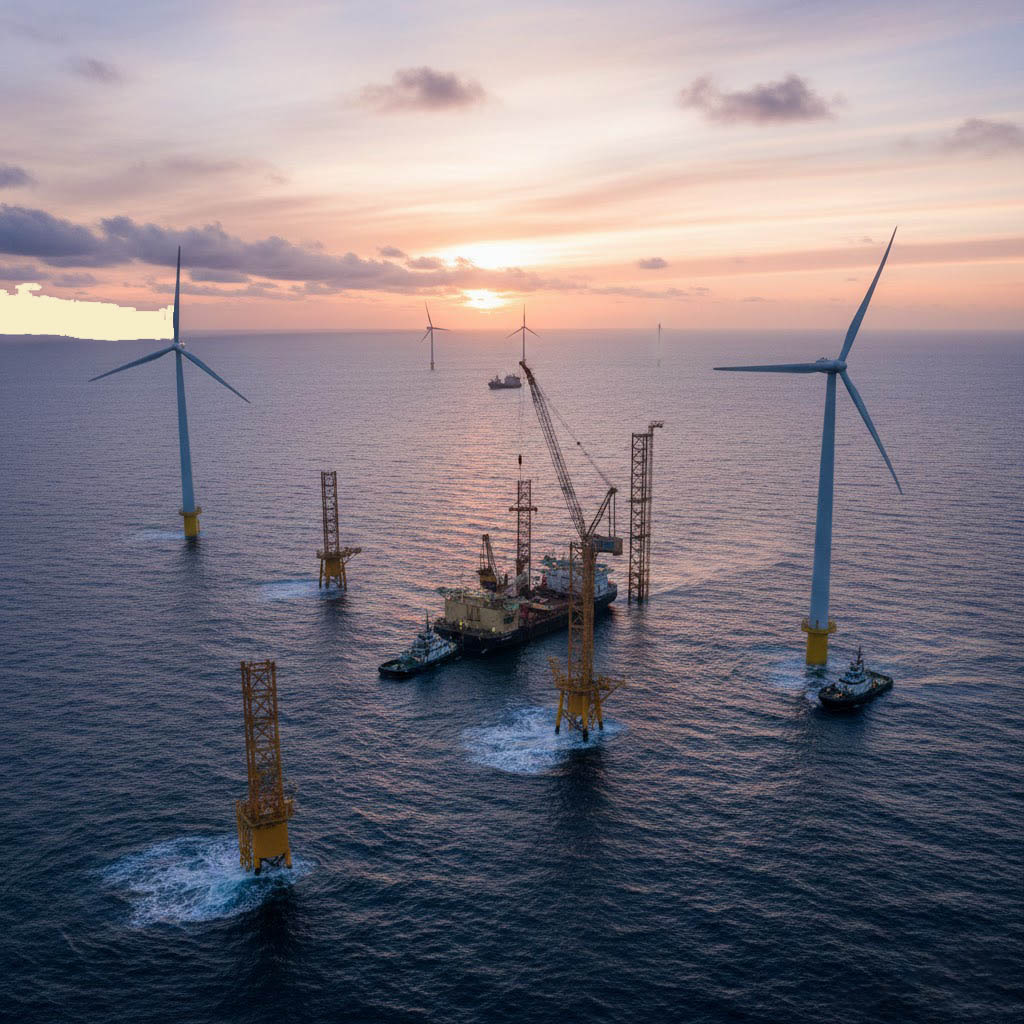
So let’s talk Sunrise Wind for a second because it’s not a paper project. Sunrise Wind is being developed by Orsted. The company told the court it has spent or committed more than seven billion dollars so far and described the project as rough forty five percent complete. It’s located about thirty miles east of Long Island Ponton near Montauk Point. Here’s the notes and bolts reason that the timing actually matters.
Orsted argues that if the stop work order wasn’t lifted quickly by February, it risked losing access to a specialized vessel needed for offshore cable installation, which would push the schedule out in a way that can’t easily be undone. And that’s also why you keep hearing the courts use the phrase irreparable harm. It’s not just this costs money. It’s this breaks the project’s build sequence. that can mean missing weather windows, losing vessels to other jobs.
Paying cancellation penalties, or, in the worst case, triggering contract defaults. So now what is the administration actually claiming? The government’s core claim is national security. That offshore wind turbines can interfere with radar creating that clutter effect, and that new classified information raised concerns significant enough to justify hitting the pause across multiple projects. Offshore wind developers counter that this risk is not new.
The mitigation is a known part of siting and design and that federal defense stakeholders were involved throughout the multiyear permitting process. Industry groups have argued that the National security concerns were part of earlier reviews and that broad stop work orders mid construction are an extraordinary step. The court so far are not saying radar risk is impossible. They’re saying, based on what’s been shown in these early hearings, the government hasn’t justified an immediate across the board construction halt. While these cases are litigated.
Now here’s why this is bigger than one judge. First, near term power and grid planning. These five projects together represent roughly six gigawatts of power generation, enough by an estimate to power about two point five million homes. And businesses. In a world where electricity demand is rising and reliability is a political issue, keeping major builds on schedule matters.
Second, investor and supply chain confidence. So the most lasting impact of the December freeze may be what it signals. That even projects that have already gained their federal approvals and are already under construction can be paused by executive action, then left to fight it out in court. Even when developers win injunctions, the process injects uncertainty injects delay risk and additional financing cost. Third, politics doesn’t end because a judge issues an injunction.
One analyst quoted in today’s report warned that even with the freeze lifted, the political risk around sunrise wind remains high. In other words, the cranes can go back up, but the headwinds aren’t going to be disappearing. So what do we watch now? First, uh we watch the appeals. Administration can try to appeal these injunctions or seek stays, though the five for five pattern so far seems to matter. Two, the merits. A preliminary injunction is not the final chapter. The underlying lawsuits will test whether the government’s process and justification can meet the administrative law standards and what kind of evidentiary showing is required when the government says this is a classified classified national security risk.
Three, mitigation and negotiation. Interior’s stated rationale for the pause was to buy time to assess whether national security risks can be mitigated. If we start seeing specific mitigation requirements, technology, operating restrictions, for example, that’s where this fight could move from courts back into agency processes and technical negotiations. And then the fourth, state pushback. Kathy Hochul called today’s ruling a big win for New York, and Leticia James has already sued over the halt, arguing it threatens the state’s economy.
grid. Meanwhile, Sheldon White House has framed the repeated losses as evidence the administration’s claims don’t hold up. So the bottom line, today’s decision is a big deal. Because it completes a clean sweep. On the initial stop work orders, but it does not end the broader US offshore wind conflict.
It just moves it into that next phase. That’s the update for today, February second twenty twenty six. If you want more of the technical side, the radar mitigation permitting and what’s the administrative record fights looks like, let me know, and we’ll do a deeper dive. Thanks for listening.