
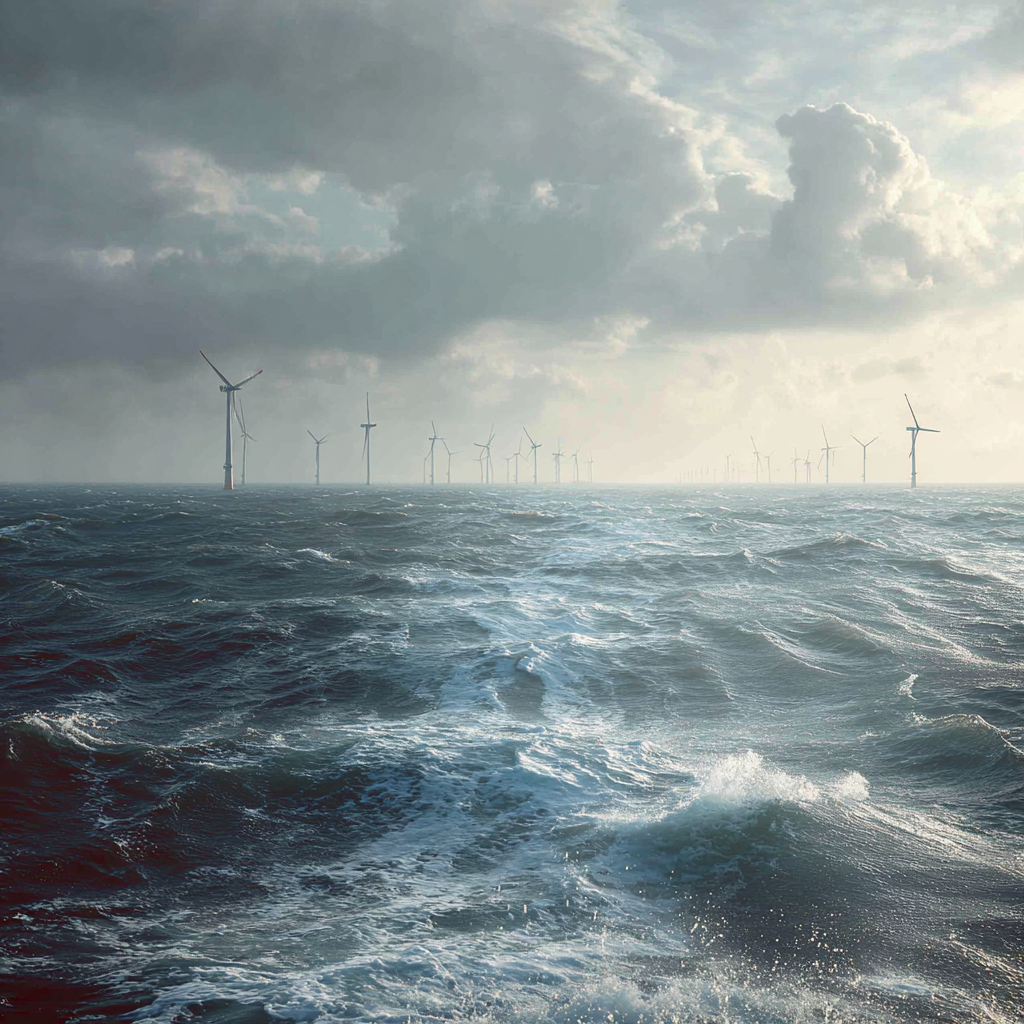


Imagine you’re trying to understand why Donald Trump keeps circling back to offshore wind. It shows up in his rallies, in truth social posts, and now it’s showing up in federal actions. the first thing to observe here is that to Trump, offshore wind doesn’t appear in speeches as an ordinary energy policy detail. Instead, this is a highly visual and emotional symbol for him., giant machines in the ocean, near beaches, shorelines, and this makes it unusual as a political target.
We can’t know what’s in his head. can but we can observe a definite pattern. It’s what he’s said for years, and it’s what he says politically most recently as discussed in previous episodes. Episodes, his administration has actually done. The symbolism overlaps with something else that’s important here.
Trump’s dislike of wind power predates his current offshore wind focus by a long time. Long before offshore wind…wind was conventional US policy pillar, Trump was publicly fighting wind wind projects near his golf properties in Scotland. He challenged a wind farm near his golf course and ultimately lost in court. This matters because perhaps it’s not abstract technology for him It’s a real lived grievance. And that translates into wind turbines as ugly things that can ruin a view ruin a brand, and ruin a premium landscape business model.
Once you frame it like that, Trump emotional intensity about windmills makes more sense. Wind turbines are
……not energy infrastructure to him. They’re a status offense, and he has a long history with it. Hi.
I’m Aaron, and welcome to the resilience report, buildings, cities, risk. So let’s shift just for a moment from Trump’s personal history history with offshore wind power to the political mechanics. Offshore wind is a uniquely attractive target for Trump because the federal government is a absolute choke point. It’s a control. In the US, a lot of offshore wind depends on federal leasing and permitting, especially through the Department of Interior.
Because these projects sit in federal waters, on the outer continental shelf. That means president who wants to slow the industry doesn’t have to convince fifty state legislatures. He doesn’t have to consult Congress. A president can bottleneck approvals. The president can pause leases.
Or change how agencies review projects just by executive order. Unfortunately, this is not hypothetical. After actually campaigning on halting offshore wind on day one, Trump moved directly on leasing and permitting once in office. In a January twenty twenty five White House memorandum, the administration directed agencies not to issue new or renew approvals, permits, leases, or loans for onshore or offshore wind projects pending a review. And it withdrew areas of the outer shelf from offshore wind leasing.
That leads to reason number one. Offshore wind is a high impact target with a relatively straightforward federal control. If Trump is trying to demonstrate that he’s reversing his predecessor’s climate agenda, offshore wind is one of the easiest, I can stop this switches he can flip. Reason number two is messaging. Offshore wind is tailor made for Trump’s style of politics.
It’s big, it’s visible, and actually somewhat easy to cast as an elite project imposed on regular people. You can show photos, videos, and then you say it’s ruining views. You’re ruining. Tourism. It’s ruining beaches tourism. Fishing, killing whales. He definitely warned us. At a twenty twenty four rally in Wildwood, New Jersey, Trump derided offshore wind and said he’d target it immediately if elected, claiming that it harms birds and whales. Whether or not those claims stand up scientifically, as rhetoric, it’s effective because it links a climate policy he disdains to identifiable local concerns.
It’s my coast. It’s my property values. It’s my fishing grounds and my wildlife. So, okay, reason number three is that offshore wind sits at the intersection of constituencies that have already friction with each other, such as coastal homeowners, Then you have commercial and recreational fishing and environmental groups, You have Maritime Industries, state energy planning, and then big developers. Offshore wind’s footprint is visible physical, so it naturally generates organized opposition.
Even when the arguments aren’t scientifically supported at all, the existence of controversy itself is politically useful because it lets a national politician present themselves as the defender of locals’ against bureaucrats. That’s why whale deaths became such a recurring talking point. It’s emotionally effective. It’s a powerful image. But here’s the key factual anchor.
NOAA Has said there are no known links between whale deaths and any offshore wind activities, and it says there’s no scientific evidence tying offshore wind survey noise to whale deaths. Fact check dot org also notes NOAA’s position that to date, no whale death has been attributed to offshore wind activities. AP has also reported that scientists and federal authorities say there’s no credible evidence connecting offshore wind farms to whale deaths. so if you’re asking, why does Trump keep saying the whale thing, The answer is a long way from, well, because the scientific evidence forced him…it’s because it lets him portray clean energy as the actual environmental threat. So reason number four is that Trump’s anti wind messaging is not limited to offshore wind. Consider that it’s part of a broader long running pattern of attacking wind as an energy concept. Back in twenty nineteen, he claimed turbine noise causes cancer, an assertion completely debunked and described as false by the scientific community. I bring this up because it shows that this isn’t just a tactical wedge issue for the twenty twenty four camp campaign.
For Trump, it’s an entrenched rhetorical habit. It’s a worldview. Offshore wind is simply the newest most visible version of wind for him to attack. Especially along densely populated coastlines. Reason number five is economics and industrial politics.
Offshore wind in the US has faced real financial strain. It’s faced rising costs, supply chain issues, delays, renegotiations, and some projects have been canceled. All of that creates fertile ground for any public politician to label it as expensive or label it as a scam because audiences have heard about projects struggling. So hostility to offshore wind reverberates through the supply chain.
And, yes, the sector has been stung by soaring costs. But even aside from politics, Yale Environment three sixty has described a dramatic retreat in US offshore wind and linked the downturn to federal policy swings. While noting also that the industry faced mounting challenges even before Trump returned to office. At the same time, let’s note that wind is the most expensive energy, quote, unquote, line is unfounded. Trump’s Scotland comments claim that wind is the worst or the universally the most expensive form of energy.
But instead, onshore wind is often among the lowest cost new generation sources, while offshore wind is typically more expensive than onshore but not uniquely the worst. So the economic reality is mixed. Offshore wind has had cost and finance headwinds. but Trump’s blanket claim that wind is the most expensive doesn’t hold. At all.
Okay. So reason number six is the national security framing, which is a newer story. In late twenty five, the Department of Interior announced that it was pausing leases for large scale offshore wind projects under construction This time, it cited national security risks. Specifically pointing to the idea of radar clutter from turbines. The federal government issued suspension orders tied to claimed national security concerns.
At Trump’s ninety day suspension of five major projects, critics questioned this threat justification. Whether you agree with the national security rationale or not, it’s politically powerful because it moves the argument from good taste in Wales into a different category, into defense and sovereignty. It also creates legal and administrative pathways to delay projects even when they’ve already cleared years of permitting. The Department of Defense has already reviewed and approved these installations. The final reason is simple political contrast.
Offshore wind became strongly associated with Biden era climate policy goals and coastal state clean energy planning. Attacking it is a way to attack that entire governing philosophy. In one move, Trump attacks subsidies, He attacks regulation, decarbonization, and green industrial policy. Remember that Trump’s offshore wind leasing suspension is happening alongside a much broader push to maximize oil and gas production. And also to shift US climate posture.
That subject for another episode, of course. So when you put it together, Trump’s repeated focus on offshore wind isn’t one single obsession with a single cause. It’s an overlap of a few things. It’s a long standing personal and aesthetic hostility to wind turbines it’s a political incentive to turn a visible piece of climate policy into a villain, and combine that with the fact that offshore wind is unusually vulnerable to federal control.
That means the rhetoric can be paired with immediate executive action. Thank you for listening. See you again soon, and please hit that subscribe button if you like the episode.