

Dec 1 2025
…Hi. I’m Aaron. And this is the resilience report, buildings, cities, risk. Every week, I’m gonna brief you on what’s new in the built world, that actually matters, climate risk, infrastructure, codes, retrofit economics, materials, and the stuff cities are doing that either The works or falls apart on contact with reality.…
The editorial position is simple. We’re doing trade offs. When something sounds perfect, we’re gonna look for the hidden assumptions the missing costs, and the greenwashing. Alright. Let’s get into it.
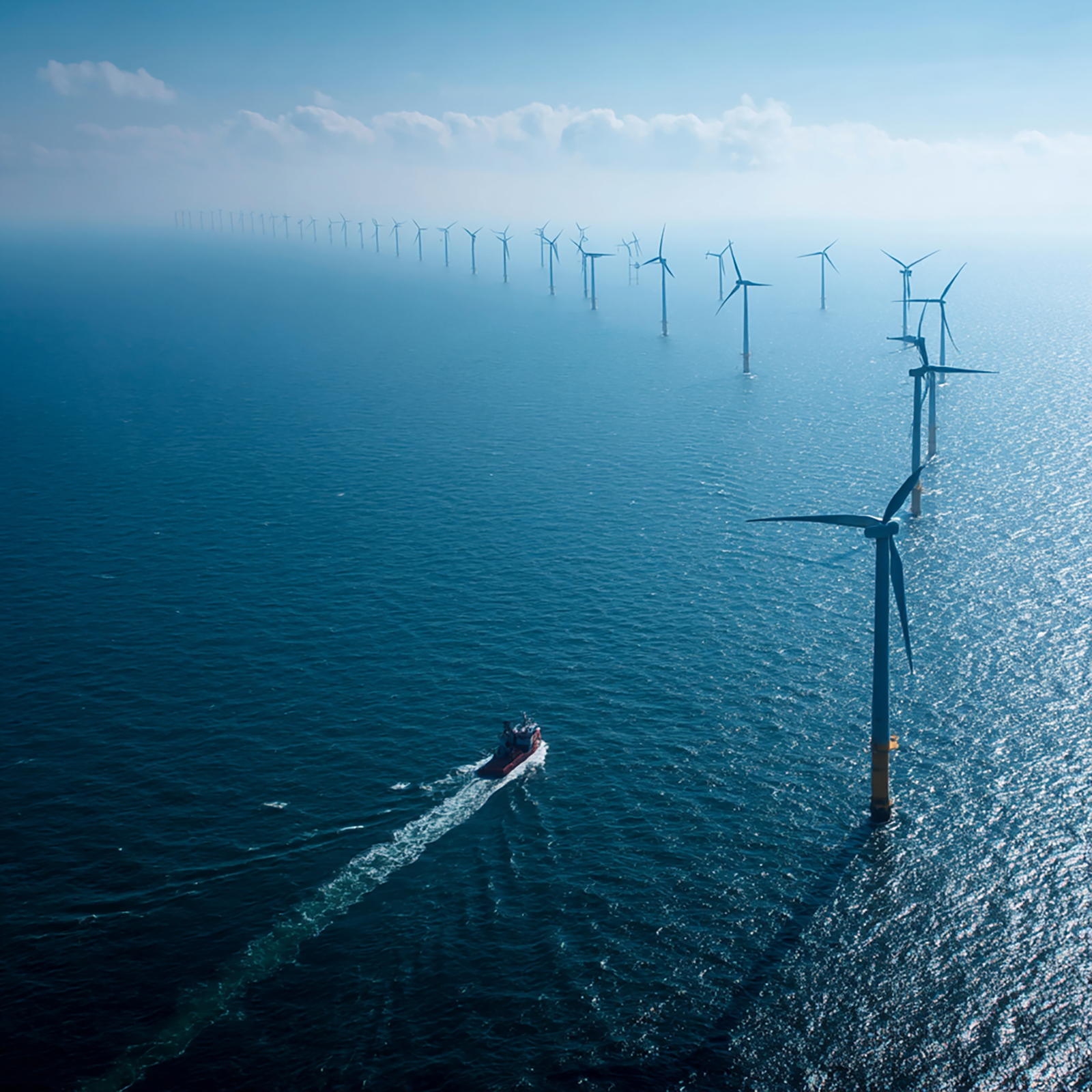
Episode one. In late December, the Trump administration ordered a pause on five offshore wind projects. Under construction on the East Coast, citing national security interests. The public explanation is, to be charitable thin, The details are mostly classified, And the pause is at least ninety days with the option to extend.
if you’re anywhere in the northeast, you care about electrification, grid reliability,. So this isn’t background noise. This is the risk that keeps getting kicked down the road, policy whiplash hitting real infrastructure mid build. So today, I want to answer one question. Is this National Security Risk Management or is National Security, quote unquote, the rapper being used to kill offshore wind.
…So here’s the basic situation. On December twenty second twenty twenty five, the Interior and the Bureau of Ocean Energy Management told developers to stop working on five large offshore wind projects. According to the AP News. The government’s language is essentially we have national security sent we have national security concerns. We have new classified information.
And we’re freezing activity while we figure out whether those risks can be mitigated. So two key details matter. Number one, it’s not just future leasing. This is squarely aimed at projects already permitted and under construction. Number two, the pause is framed as time limited but the letters explicitly say that the ninety day period can be extended.
So this is already in court. In the last few days, Orsted, the Danish builder, filed a legal challenge over Revolution Wind saying that it is far along and previously permitted after years of review. secondly, Equinor filed a legal challenge over the Empire Wind project. So this is not a pause the way a contractor pauses work because of a missing stop shop drawing or a change order. This is a collision between policy and legal risk.
So the question I want to ask and answer is simple. Is this actually about national security or is national security being used to kill offshore wind? So let’s explore what’s real versus what’s noise. First, the national security claim is not crazy on the face of it. Wind turbines can actually interfere with radar, That’s been discussed for years.
This is not new news. And Even the reporting around this move includes that radar interference is part of the rationale being cited publicly. If you’re listening and thinking, okay.
But turbines are just big spinning metal things. Yes. Radar sees objects. Big objects can create radar clutter. Shadows processing errors.
The question is not can this happen. The real question is if this risk exists, why approve these projects in the first place? And what changed now? That’s where the story starts smelling like whiplash. A national security expert quoted in the AP coverage, makes basically that point.
Radar concerns have been known for decades. So So what is the new threat vector that justifies a stop work order now? Plausible issue and questionable timing. Second, the government is using classified as a wall. Interior letters describe new classified information including rapid evolution of adversarial technologies.
And frame the risk as serious and immediate. You can’t disprove a classified rationale. In public at least. That’s the point. But we can still be skeptical in a very useful way.
If the threat is truly immediate and severe, then the government should also be saying, what mitigation options exist and what criteria would allow the projects to restart. Right now, there’s no public reporting on that. If the issue is primarily radar, there are established mitigation approaches in the world. operational curtailment under conditions, radar upgrades, data fusion. There are procedural changes that can be made.…
Those mitigations are not magic, but they do exist out there. So if the administration’s position is only suspension solves it, that’s a very aggressive stance.
…So the third element the ethics and process questions, The AP reporting notes lawmakers are calling for an ethics investigation relating to the acting BOEM director who signed the letters. Even if nothing improper happened, the mere presence of that allegation matters because it feeds the narrative that this is all political theater, not risk management. And here’s the primary takeaway. Process credibility is part of resilience. If your permitting and approvals are not stable, investors price in volatility and volatility can kill the boring but essential infrastructure that you need for resilience.
Fourth element, there is some spin on both sides here. this is where we put on the greenwashing filter because greenwashing is not only a renewable energy problem. It’s a messaging problem. So the anti wind spin sounds like it’s ugly. Inefficient, it’s a scam, dressed up as security or ratepayer protection.
That may be since sincere, but it’s also a rhetorical shortcut. So the pro win spin often sounds like it will be cheap,
It will be reliable,
it’ll create jobs, and the hard parts
Are blurred out.
Offshore construction complexity and financial risk. Simple fact that wind is a variable and needs grid planning. the truth is usually pretty annoying, actually.
Offshore wind can add a lot of energy and can diversify supply, but it’s also expensive, logistically hard, and difficult to finance. And finally, uh
, it lives inside permitting and political machine that can change direction fast, apparently. So the fifth element here, concrete example of what’s at stake. Let’s take the coastal Virginia offshore wind because BOEM’s own project page includes real numbers there. BOEM describes the approved project at roughly Twenty six hundred megawatts with an estimating power of over nine hundred thousand homes and notes that on December twenty second twenty twenty five, the acting director issued an order suspending activities for ninety days for national security reasons.
Whatever you think of offshore wind, freezing a project of that magnitude midstream is not a small move. This is a policy choice with real operational consequences. the sixth element here, lawsuits are not a side story. They are the story. Orsted, the Danish company, says revolution wind was expected to begin generating power as soon as January twenty twenty six and is seeking an injunction.
Equinor is also in court over Empire Wind. And that tells you two things. Number one, it tells you that developers think they have a strong enough legal footing to fight…not just to negotiate. And it also says, number two, even if they win, time is money. A one month slip in offshore work windows is not like slipping on an interior drywall project.
So note the local reporting out of Massachusetts. Vineyard Wind was reportedly allowed to continue producing power even amid the halt, which hence that the messy reality of stop work versus turn it off is still being worked out. So, yes, the security rationale might be real, but the way this is being executed looks like the kind of governance instability that makes all infrastructure hard to build regardless of the tech. So this is what grid risks looks like in the real world. In resilience terms, the big signal here is not wind good or wind bad.
The big signal is your energy strategy can be invalidated by policy whiplash. And that means any resilience plan that relies purely on a procurement story is fragile. If you plan for resilient and low carbon, it’s basically buyrenewable credits, electrify everything, assume the grid will get cleaner and stronger on some sort of schedule. This story should make you nervous…
So how about three practical moves starting now? First of all, we treat grid decarbonization as uncertain. we can design for electrification sure, but design for load flexibility also. Thermal storage where it makes sense, smart sequencing, and controls that can shed noncritical loads. Secondly, we should separate low carbon from resilient.
These two topics overlap, but they are not the same. Resilience means you can operate through outages, heat waves, smoke, flooding, that sort of stress. A clean grid can help, but it’s not a backup plan. The third point is policy volatility has to be added to the risk register. Owners do this for interest rates, for labor, materials,
…Energy policy should be treated the same way.
If the grid supply mix is part of a financial model, which it is, it deserves scenario planning. So what should cities and agencies do differently here? cities love big targets, and targets are necessary. what’s often missing is implementation durability. If a city is banking on offshore wind for capacity, and emissions reductions, then the city…
Needs contingency plans that are not fantasy. It needs transmission, interconnection. It needs demand side management. for energy reduction,
, building envelope upgrades, and a realistic approach to backup power that’s not every building buys a generator. So the uncomfortable trade off here is national security versus energy security. The story is a reminder that security is not one thing. If turbines actually truly degrade critical defense systems, that’s a national security issue. But secondly, if we stall major generation projects while demand is growing, that’s absolutely an energy security issue.
And then if we keep adding load via electrification without matching supply and grid upgrades, well, that’s a reliability issue. A serious administration now would talk about these trade offs explicitly and show the mitigation path Right now, we are almost only seeing the stop part with limited public detail on how we restart safely. So now the moment for our myth versus reality. The myth is if my building is a hundred percent renewable, then I’m resilient. Closer to the reality would be that most a hundred percent renewable claims are accounting.
They can be valid for carbon accounting, but they don’t keep your chillers running during a grid event. They don’t guarantee price stability. And they definitely do not protect you from policy reversals like we’re seeing here. The offshore wind freeze is a clear example You can plan around a grid getting cleaner and then apparently, wake up to a ninety day stop work order that can be extended indefinitely. So resilience is performance and results, measured under stress.
we need to start with reducing the stress envelope, shading, ventilation options, heat resilience in buildings. And then add systems that can ride through it, controls, storage, where feasible, and realistic backup strategies. So carbon claims without outage strategy are effectively marketing. So where does this land us? Number one,
Radar
and security concerns may be a real thing.
Number two, the timing and the lack of clear public mitigation criteria Make this feel like policy being used as a weapon. Three, for cities, especially on the East Coast, the lesson is to stop treating grid transition as a smooth ramp. We have to design now like the ramp has potholes and risks. Next episode, I wanna do something very practical.
Resilient electrification, how to go all electric without building on a perfect grid. So please send me your favorite green claim from a project or a product or a policy and I’ll listen to it. No dunking, just trade offs.