

There’s a certain sentence politicians use when they’re backing away from something without quite admitting it. usually sounds something like this: “We remain committed to our long term goals, but we have to be realistic about affordability. About reliability. We have to be realistic about market conditions.”
That is retreat language. Just dressed up nicely. And lately, you’ve been hearing a lot of that kind of language in the northeast states, states that were talking very confidently about climate leadership a couple of years ago and are now talking a lot more about costs, delays, procurement issues, protecting ratepayers. So what happened? Are Northeastern states actually backing away from green energy commitments?
Or is this what climate policy looks like once it stops being a slogan and starts showing up in construction costs? Hi. I’m Aaron, and welcome to the resilience report. Building cities and risk. Today, I wanna talk about this emerging story in the northeast the sense that states are blinking on green energy.
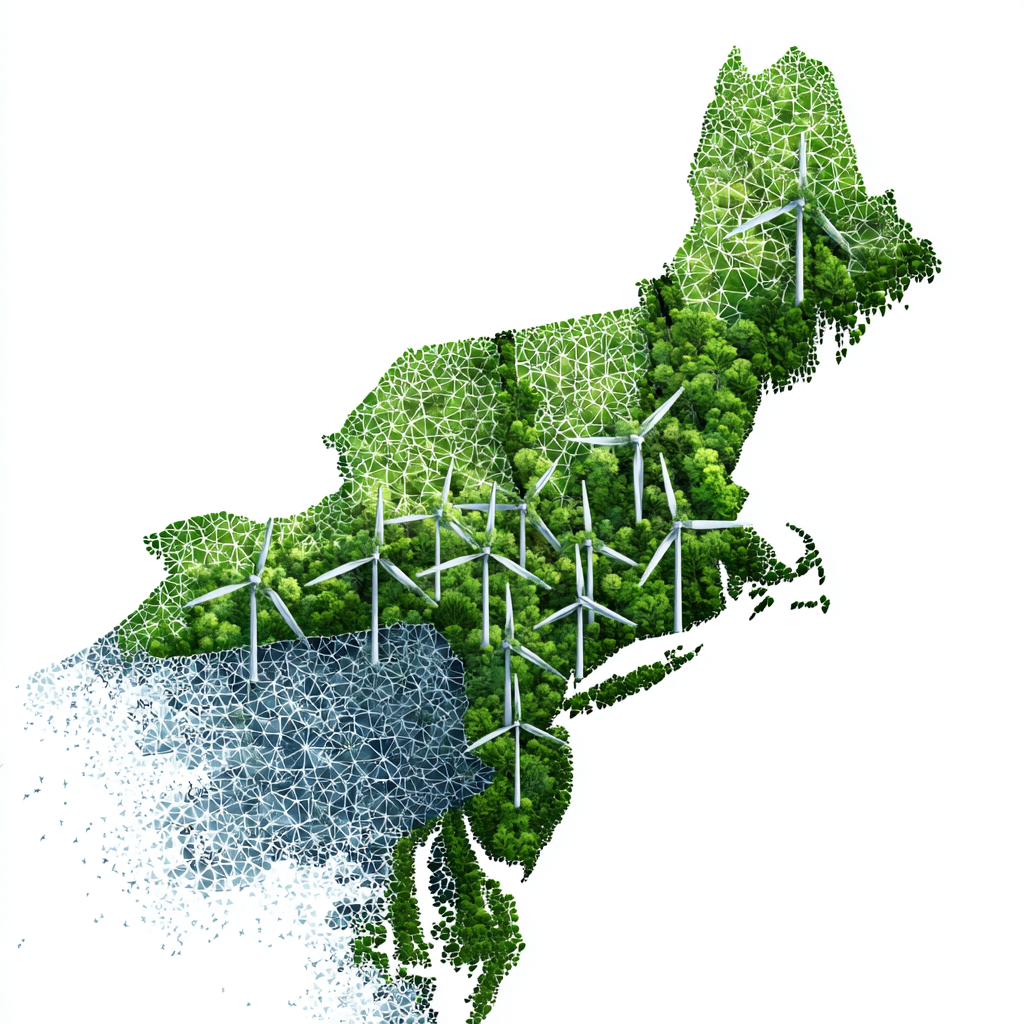
And I think the truth is a little messier than the headlines suggest. Because this is not exactly a clean reversal. It’s more like climate ambition colliding with the real world and getting a little bruised. So for a while, the northeast liked to see itself as the grown up in the room on the topic of climate. This was the region that was going to prove all of it could be done.
Offshore wind, electrification, clean grids, lower emissions. Serious targets. The northeast was going to lead and maybe shame everyone else into following. And to be fair, a lot of that was real. These are not fake commitments.
States passed laws, set targets, states ran procurements, and announced these goals. But there was always a weakness under the surface because it is one thing to announce a clean energy future. It is quite another thing to build it in the United States in real time with the current politics with the current financing, and supply chains. That’s where things got rough. Interest rates have gone up.
Offshore wind got more expensive. So supply chains also have become more messy. Permitting is still staying slow, and transmission is still a headache. It remains that. Local opposition did what local opposition usually does.
And then to top all of this off, federal politics became openly hostile. And that’s when the language starts to change. Suddenly, the conversation is less about bold transition and more about affordability. It’s less about urgency and more about flexibility. It’s less about building fast And now, honestly, it’s more about not scaring voters.
This shift matters because that is often the point where a government has not abandoned the goal, but has started shaving the corners off of it at the very least. So this dramatic This kind of retreat doesn’t usually arrive with a dramatic announcement. No one steps up to the podium and says, hey. Good news. We’ve lost our nerve.
Instead, this comes in a much softer language practical language. Almost responsible language. You hear about protecting households. You hear about managing ratepayer impacts. Reassessing procurement conditions.
You hear about responding to market uncertainty. Yeah. We have to keep the options open. Some of this is fair. These are not imaginary concerns.
Energy costs matter a great deal. Voters care about these bills, Governments do have to deal with reality. But let’s still call it what it is. This is a political narrowing of climate ambition. Not always a rejection,
But definitely a narrowing. Because once a state starts framing clean energy mainly through the lens of immediate affordability, it tends to choose the least painful path. Fewer swings, more delays, more caution, more hedging. Now that may be smart politics. I get it.
But climate policy has a timing problem. A delay is not a neutral fact. And a pause is not free. Slowing down changes the outcome. And that’s the bind the northeast is in right now….
Politically, safest move is to protect any present comfort. Physically, the necessary move is to build future capacity and build it fast. So these two things are not the same, and that’s why this moment matters because it tells you where the actual priority is. Not in speeches. This comes in pressure.
And when the pressure rises, a lot of states did not drop the climate language. They dropped confidence, basically. So now I do not think the right takeaway is that green energy in the northeast is collapsing. That’s too simple. Projects are still moving.
Targets still exist. Clean energy policy seems to be still alive. This is not a total ideological surrender, but it is a stress test. And what the stress test is showing is that the transition is a lot more politically fragile than people wanted to admit. What the northeast is really backing away from is not green energy.
It’s a fantasy version of green energy. This version is where decarbonization would be orderly, smooth, popular, maybe even a little glamorous. Nice renderings, It would have big announcements, ribbon cuttings, and a general sense that our history is moving in the right direction. Well, that version is gone. We are now in the ugly phase, the expensive phase, the litigate phase.
Phase where every megawatt has to survive financing procurement, and public skepticism. And above all, federal interference. In other words, the normal American infrastructure phase. And honestly, maybe that makes this story more useful. Because we are now seeing what these commitments are made of.
It is easy to be ambitious when the politics are friendly and the money is cheap. it is a lot harder when the projects get more expensive, the bills rise, and somebody has to explain why this is still worth doing. And that’s where the northeast states are now. Not quitting, not exactly pushing forward with confidence either, just blinking. And the question is, whether this blink is a pause before the next push or the beginning of a much longer habit where states keep the climate rhetoric but lower the intensity of the delivery.
And that’s the real risk. Not that they say they no longer believe, They keep saying they do, and we build less and less. A blink can mean fear. It can also mean recalculation. We will find out soon enough which one this is because the atmosphere, unfortunately, is not especially moved by careful messaging.
Thanks for listening. If you like the show, please subscribe.